
Most builders and architects view doors as simple openings, but successful commercial projects require doors to function as complete systems that affect circulation, acoustics, security, and aesthetics throughout the building’s lifecycle.
The wrong door choice creates ongoing issues long after handover, while the right selection delivers years of reliable performance. Commercial projects rarely have a one-door-fits-all solution, which is why understanding your options matters more than you might think.
At Bris Aluminium, we supply commercial door systems across Brisbane for fit-outs, refurbishments, and new builds. We work with builders and project teams who need solutions that install cleanly, meet compliance requirements, and perform reliably in real-world conditions.
This guide will walk you through everything you need to know about commercial door systems in Brisbane, from understanding different door types to making the right choice for your specific project requirements.
Understanding commercial door systems
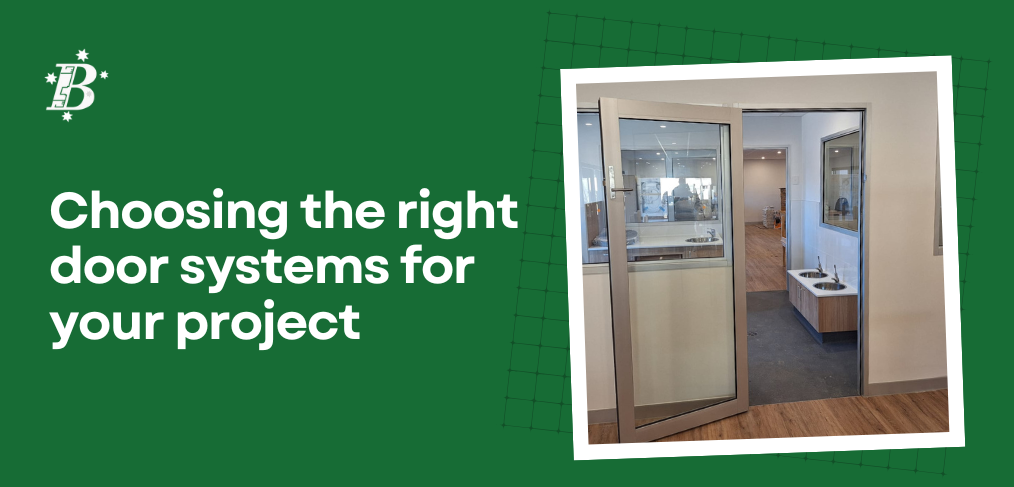
A commercial door system includes far more than just the door leaf. When specifying doors for commercial projects, a systems-based approach leads to better outcomes. That means considering:
- Door leaf (aluminium doors or timber)
- Aluminium door frame system (cavity slider, fixed or adjustable)
- Hardware (hinges, closers, locks, automation)
- Wall and ceiling interface components
- Accessibility (Learn more about wheelchair door requirements)
Aluminium doors in commercial fit-outs: why they’re widely used
Commercial aluminium doors have become the go-to choice for Brisbane commercial projects, and for good reason. These systems offer several advantages that make them ideal for modern commercial environments:
Clean, Contemporary Aesthetic
Aluminium door frames provide the sleek, professional appearance that modern commercial spaces demand. Whether you’re working on office buildings, retail spaces, or healthcare facilities, aluminium doors deliver a consistent, high-quality look.
Lightweight but Durable
Brisbane’s climate can be tough on building materials, but aluminium doors handle humidity, UV exposure, and temperature variations without warping or deteriorating. This durability reduces maintenance costs and ensures long-term performance.
Read more about why aluminium is the leading choice of material in fit outs.
Hinged or swing doors are the most versatile commercial option
Hinged doors remain the baseline solution for most commercial applications.
When Hinged Doors Work Best:
- Security is required: Traditional locks and hardware provide superior security compared to sliding systems
- Acoustic performance matters: Proper seals and door construction deliver better sound isolation
- Fire ratings may apply: Fire-rated doors are typically hinged systems with specialised hardware
- Wall space utilisation: Allows full use of surrounding wall space for fixtures or furniture
Cavity slider doors for space-saving
Cavity sliding doors excel at saving floor space, but keep in mind they aren’t the best solution for acoustics. However, this can be mitigated with adequate wall insulation or acoustic panels.
Ideal Applications for cavity sliders:
- Corridors: Where swing clearance would impede traffic flow
- Tight rooms: Areas where every square metre of floor space matters
- Circulation areas: Where doors need to remain open frequently
Custom timber doors
While aluminium doors dominate Brisbane’s commercial market, custom timber doors serve specific functions that make them valuable for certain applications.
Common Applications:
- Security-focused areas: Where maximum door strength is required
- Executive spaces: Providing warmth and contrast with aluminium systems
- Feature entries: Creating impressive first impressions
- Acoustic separation: Where superior sound isolation is essential
Timber doors can often be integrated into aluminium door frame systems, combining the aesthetic and performance benefits of timber with the weather resistance of aluminium frames.
Choosing the right commercial door system: what should drive the decision?
Successful door specification requires understanding how different priorities affect your choice. Here’s a framework for making informed decisions:
Space Considerations
Tight layouts → cavity sliders
When floor space is at a premium and swing clearances would create circulation problems, cavity sliding doors make sense.
Flexible walls and future adaptability → hinged/swing doors
If the building may undergo future modifications or the wall systems need to remain adaptable, hinged doors preserve more options.
Acoustic requirements
High privacy needs → swing doors
Meeting rooms, private offices, and confidential spaces require the superior acoustic performance that properly sealed hinged doors provide.
Open-plan integration → cavity sliders
In areas where acoustic separation isn’t critical, cavity sliders can enhance the open feel of modern commercial spaces.
Security Priorities
Controlled access required → hinged doors
Security systems, high-performance locks, and access control integrate most effectively with hinged door systems.
Maximum security → timber swing doors
For the highest security applications, solid timber doors in security-rated frames provide the best protection.
Door hardware
Doors can’t function without hardware, and poor hardware choices can create ongoing problems like longevity, security and user experience.
With Bris Aluminium, we supply everything you need for doors, including hardware across the following categories:
- Closers and stops
- Lock sets and handles
- Hinges
- Return air grilles
- Glazed viewing panels
Get the right door system from day one
At Bris Aluminium, we help builders and architects specify door systems that align with project requirements, budget constraints, and timeline demands.
Don’t let door system problems compromise your project outcomes. Contact Bris Aluminium today to discuss your commercial project requirements.
Commercial doors FAQs
What’s the difference between commercial and residential doors?
Commercial doors must meet higher performance standards for durability, fire safety, accessibility, and security. They’re designed for frequent use and must comply with commercial building codes that don’t apply to residential projects.
How do I choose between aluminium and timber for commercial doors?
Consider your priorities: aluminium doors offer weather resistance and contemporary aesthetics, while timber provides superior acoustic performance and security. Many projects use both materials in different locations based on specific requirements.